
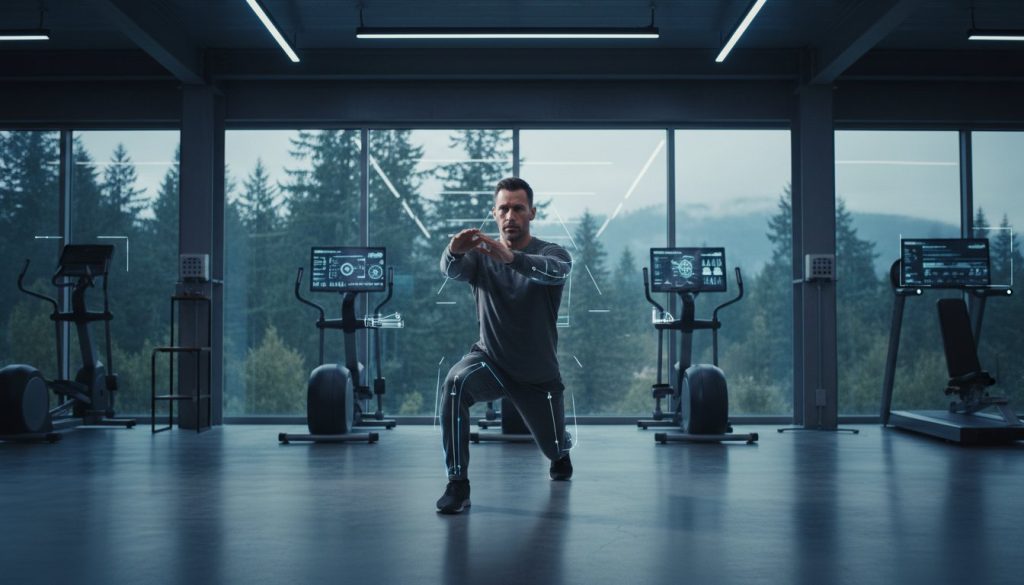
Rest is not a recovery strategy; it’s a pause button. You’ve likely spent 42 days waiting for a nagging ache to vanish, only to have it flare up the moment you resume your training. It’s frustrating to follow a ‘wait and see’ medical approach when your identity is tied to movement. If you’re seeking injury recovery in Beaverton, you’ve probably realized that standard physical therapy often stops at ‘pain-free’ rather than ‘performance-ready.’ This gap is where 70% of re-injuries occur because the body isn’t yet prepared for the demands of high-level output.
We believe recovery is a craft, not a waiting game. By shifting from a goal-oriented mindset to a systems-based approach, we use objective data to drive your progress. You’ll learn a framework designed to bridge the distance between clinical rehab and peak performance through intentional, 1% gains. This article outlines the three specific metrics we use to ensure a full return to sport without the fear of regression. We’re moving away from guesswork and toward a clear, compounding plan for your physical resilience.
Key Takeaways
- Bridge the gap between clinical discharge and peak performance by moving beyond standard rehabilitation protocols.
- Use objective lab data to address the internal biological friction and chronic inflammation that stall your recovery process.
- Build a resilient physical architecture by prioritizing active mobility over passive flexibility to prevent future setbacks.
- Use a data-driven checklist to select an expert in injury recovery in Beaverton who prioritizes measurable strength metrics over subjective feelings.
- Adopt a systematic method to identify and eliminate the lifestyle friction that led to your injury in the first place.
The Performance Gap: Why Standard Injury Recovery in Beaverton Often Fails
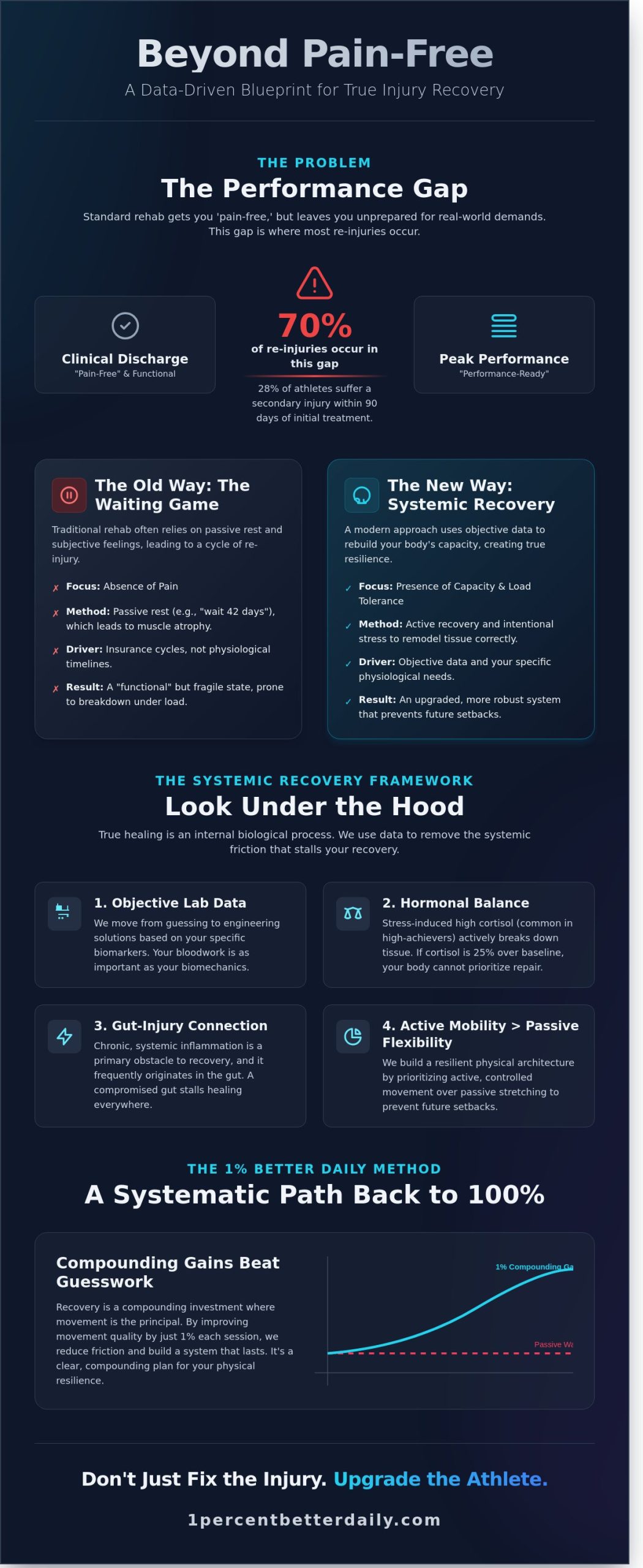
Standard medical care often stops the moment you become functional. For most people, functional means you can walk to your car or sit at a desk without acute distress. If your goal is to return to the trails at Cooper Mountain or hit a personal best on the Nike campus, functional is a dangerously low bar. This creates what we call the Performance Gap. It is the unstable space between clinical discharge and full-speed activity. In this gap, 28% of local athletes suffer a secondary injury within 90 days of finishing their initial treatment.
Most Physical therapy models are built on insurance cycles rather than physiological timelines. These systems prioritize the absence of pain over the presence of capacity. True injury recovery in Beaverton requires more than just waiting for a flame to go out. It requires rebuilding the structure so it can handle heat again. Nagging injuries rarely stem from the initial trauma alone; they persist because of unresolved compensations. Your body is an expert at cheating. It shifts loads to other joints to protect the wounded area. If these movement patterns aren’t recalibrated, you’re simply waiting for the next breakdown.
The traditional advice to rest for 42 days is frequently counterproductive. While initial protection is necessary, total inactivity leads to tissue stagnation and muscle atrophy. Tissues require progressive, intentional stress to remodel correctly. Without load, the repair process is disorganized and weak. We view recovery as a compounding investment where movement is the principal.
The Problem with ‘Good Enough’ Rehab
Insurance metrics don’t care about your split times or your vertical jump. They care about “activities of daily living.” This creates a disconnect for the active Beaverton community. There is a massive difference between pain-free movement and load-tolerant movement. Many people feel fine during a walk but experience a relapse the moment they apply 100% force. This happens because their rehab never moved past the “functional” phase into the “exceptional” phase.
Moving Toward Active Recovery
Active recovery is a system of intentional movement designed to promote blood flow and neural adaptation. The central nervous system often “holds onto” pain as a protective mechanism long after the physical tissue has healed. We use low-friction movements to signal safety to the brain. At 1% Better Daily, we focus on intent over intensity. By improving movement quality by 1% each session, we reduce the friction of the injury recovery process in Beaverton and build a system that lasts. We don’t just fix the injury; we upgrade the athlete.
The Systemic Recovery Framework: Why Lab Data is Your Secret Weapon
Healing is not a passive event. It is an active, internal biological process governed by your endocrine and immune systems. For many high-achieving professionals, injury recovery beaverton becomes a stalled project because they treat the symptom rather than the system. A 50-hour work week combined with high-stakes decision-making creates a physiological ceiling on your body’s ability to repair itself. When your internal environment is compromised, the best physical therapy in the world cannot overcome the biological friction.
Chronic inflammation is the primary obstacle to progress. When a “simple” case of tendonitis persists for 180 days, the issue is rarely the tissue itself. It is the systemic environment. Lab testing reveals the hidden variables that physical exams miss. Recovery demands a specific ratio of raw materials and hormonal signals. If either is missing, your progress will plateau. By adopting an evidence-based approach to sports injuries, we move from guessing to engineering a solution based on your specific biomarkers.
Hormones and Tissue Repair
Hormones act as the project managers of your cellular repair team. Testosterone and growth hormone are essential for protein synthesis and structural integrity. However, the executive stress common in the Beaverton tech and corporate sectors often spikes cortisol levels. High cortisol actively blunts the healing response. It breaks down tissue rather than building it. We use comprehensive blood panels to ensure your internal chemistry is set for success. If your cortisol is 25 percent higher than the healthy baseline, your body cannot prioritize repair. When searching for injury recovery beaverton, you must choose a specialist who understands that your bloodwork is as important as your biomechanics.
The Gut-Injury Connection
Systemic inflammation frequently originates in the gut. If your gut barrier is compromised, it triggers a low-grade immune response that manifests as joint pain and slow healing. Targeted nutrition protocols accelerate collagen synthesis by providing the exact building blocks your tendons require. Systemic inflammation acts as a biological drag that extends recovery timelines by keeping the immune system in a constant state of high alert. To see how these systems compound over time, you can explore our framework for optimizing daily recovery habits. Small, intentional shifts in your internal biology lead to massive gains in physical resilience.
Mobility vs. Flexibility: Building a Resilient Architecture
Flexibility is the range of motion available to a joint. Mobility is your ability to own that range. If you can move a limb into a position but cannot exert force there, you are fragile. This distinction is the foundation of effective injury recovery beaverton programs. We don’t just want longer muscles; we want stronger systems. Resilience is not a gift. It is an engineering outcome achieved by exposing tissues to progressive, controlled stress. When you build joint capacity, you create a buffer against the unexpected loads of daily life.
Why You Should Stop Mindless Stretching
Many people stretch because they feel “tight.” Often, this isn’t a length issue. It’s a neural safeguard. Your brain creates tension to protect a joint it perceives as unstable. Yanking on that tissue increases friction. It can make you 15% more likely to experience a strain because you’ve removed the body’s natural brakes. Stop chasing length and start building stability. Focus on isometrics. Hold a specific position for 30 seconds under active tension. This signals to your nervous system that the range is safe. It’s a 1% deposit into your joint’s long-term capital.
Corrective Exercise as a Performance Tool
Corrective work shouldn’t feel like a rest day. It requires 100% intentionality. For the thousands of professionals at Beaverton employers like Nike or Intel, the “seated posture” creates specific imbalances. The hip flexors aren’t just short; they’re weak. Real injury recovery beaverton involves integrating mobility drills into a larger strength system to ensure the gains stick. This is where understanding prehab vs rehab strategies for long-term physical resilience becomes crucial for preventing future breakdowns. Use these methods to reverse the damage:
- Eccentric Loading: Lower weights slowly over a 5-second count to build structural resilience.
- End-Range Isometrics: Push against an immovable object at your maximum range to “lock in” new mobility.
- Systemic Integration: Move from isolated drills to compound movements immediately to teach the brain how to use the new range.
You are engineering a body that can handle the stress of your environment. Consistency is the lever. Small, daily gains in joint control compound over 365 days into a completely different physical identity. Don’t look for a quick fix. Look for a better system.
Selecting an Injury Recovery Specialist in Beaverton: A Checklist
Effective recovery is an engineering problem. It requires a system that bridges the gap between clinical rehab and high-level performance. You don’t just want to stop hurting; you want to return to your previous output. Look for a practitioner who understands this entire spectrum. A specialist who only uses elastic bands will eventually stall your progress. You need access to progressive loading tools like barbells and cable systems to build genuine tissue resilience. This is how you turn a vulnerability into a strength.
Prioritize coaches who rely on objective data. Subjective feedback like “it feels better” is a poor metric for long-term success. Demand a coach who tracks strength metrics, limb symmetry indices, or health markers. If your injury recovery beaverton plan doesn’t involve measurable benchmarks, you’re guessing. Guessing leads to setbacks. Systems lead to compounding gains. A disciplined approach ensures that each session is an investment in your future mobility.
- Choose a facility with equipment designed for heavy, progressive loading.
- Select a coach who integrates lab work or blood chemistry to monitor systemic stress.
- Ensure the location is local to Beaverton or Hillsboro to maintain 100% attendance.
Questions to Ask Your Potential Coach
The right questions reveal a coach’s underlying philosophy. Ask: “How do you determine when I’m ready for 100% intensity?” A professional will cite a 90% limb symmetry index rather than a vague calendar date. Ask if they coordinate with other medical professionals or analyze health markers like Vitamin D and C-reactive protein. Finally, ask how they distinguish between training through pain and training around it. A disciplined coach chooses the latter to keep the momentum moving forward without causing further friction.
The Beaverton Professional Lifestyle Factor
Your recovery doesn’t happen in a vacuum. It happens alongside 50-hour work weeks at Intel, Nike, or Columbia Sportswear. A specialist must understand these specific stressors. High-stress executive roles and frequent travel schedules require a flexible yet firm system. Training near the Amberwood Dr area reduces the friction of commuting. This proximity ensures you stay consistent even when work demands increase. Consistency is the lever that makes injury recovery beaverton successful over months, not just days. You’re building a new identity as a resilient athlete, one small gain at a time.
Recovery is an intentional investment in your long-term performance. Start building a more resilient system today at 1 Percent Better Daily.
The 1% Better Daily Method: A Systematic Path Back to 100%
Effective recovery is not a matter of luck. It’s a result of systemic optimization. At our facility near Hillsboro, we view injury recovery beaverton as an engineering challenge rather than a medical inconvenience. We don’t just fix the site of the pain; we identify the specific lifestyle friction that caused the breakdown. This involves auditing your sleep, nutrition, and movement patterns to remove the obstacles to your progress. By addressing the root cause, we ensure the injury doesn’t return in six months. The most successful professionals understand that implementing proactive prehab vs reactive rehab approaches prevents these costly recovery cycles from recurring.
Our method combines high-level in-person coaching with 24/7 digital support. This creates a loop of total accountability. You aren’t left to guess what to do between sessions. We provide a clear architecture for your day, turning the 168 hours of your week into a compounding investment in your health. This steady, mechanical progress is what builds lasting resilience.
Phase 1: The Diagnostic Deep Dive
We begin with objective data. Our team utilizes 22 specific movement markers and comprehensive lab testing to find the “why” behind your physical limitations. This diagnostic phase removes ambiguity from the equation. We create an initial protocol that balances tissue healing with the maintenance of your other fitness qualities. You can learn more about our personalized fitness program process to see how we integrate these diagnostics into a long-term plan. We ensure you remain active while you heal, protecting your aerobic base and strength levels.
Phase 2 & 3: Compounding Gains and Performance Integration
Once the foundation is stable, we move toward compounding gains. We transition from corrective movements to traditional strength training using 3 to 5 modified parameters to manage load safely. This isn’t just about returning to your old self. It’s about building a more robust system than you had before the injury. The final step involves testing your body under real-world performance conditions. We help you shed the “injured” label and embrace the identity of a high-performer. Results are built on these small, repeatable units of effort. Book your discovery call and start your 1% journey today.
Build Your Path to Lasting Performance
Recovery isn’t a matter of luck. It’s an engineering problem. Most standard options for injury recovery beaverton fail because they ignore the underlying biological data. We replace vague protocols with precise, data-driven systems based on your unique blood chemistry and 40+ specific biomarkers. This ensures every movement serves a specific purpose in your physical architecture. By shifting your focus from temporary flexibility to systemic resilience, you invest in high-performance longevity that protects your body for the next decade.
True progress happens in the margins. The 1% Better Daily method turns the recovery process into a manageable series of small wins. You gain 24/7 coach access through our private app to eliminate friction and maintain constant momentum. This level of intentionality transforms your identity from an injured athlete into a disciplined practitioner. When you commit to the system, the results compound. You don’t have to wait for health to happen; you can build it one deliberate step at a time.
Start Your Systematic Recovery Journey
Your return to 100% starts with a single, data-backed decision. We’re ready to start the clock when you are.
Frequently Asked Questions
How is performance coaching different from physical therapy?
Physical therapy focuses on restoring basic function to a specific joint; performance coaching optimizes the entire human system for high-level output. While a therapist might spend 30 minutes on local tissue repair, a coach builds the lifestyle systems that support long-term durability. We view recovery as a 100% integrated process. It’s about shifting from a patient identity back to an athlete identity through disciplined, incremental gains.
Can I still workout while recovering from an injury?
You can and should train the 90% of your body that remains healthy while the injured 10% recovers. Complete rest often creates more friction by degrading your existing habits and metabolic health. We use a system of modified movements to maintain your training momentum. This approach ensures that your recovery doesn’t cost you your hard-earned physical progress or your mental discipline.
How much does injury recovery coaching in Beaverton cost?
Our injury recovery beaverton programs typically range from $150 to $400 per month depending on the level of systemic oversight required. Think of this as an investment in your physical capital rather than an expense. By paying for a structured system now, you avoid the compounding costs of chronic pain and future surgeries. We prioritize high-leverage actions that provide the greatest return on your effort.
What kind of lab tests do you use for recovery optimization?
We utilize comprehensive blood panels and Vitamin D3 testing to identify biological friction in your recovery process. A study from the Journal of Sports Science in 2022 showed that athletes with Vitamin D levels below 30 ng/mL recovered 25% slower from soft tissue injuries. We analyze these data points to remove the guesswork from your nutrition. This objective data allows us to build a more efficient recovery system.
How long does it typically take to see results with your method?
Most clients experience a measurable shift in movement quality within the first 21 days of consistent implementation. True systemic change relies on the law of compounding gains. While a single session provides immediate clarity, the real transformation happens after 90 days of 1% daily improvements. We focus on the process of building durable habits because sustainable results are the byproduct of a well-maintained system.
Do you work with post-surgical patients in the Hillsboro area?
We provide post-surgical support for residents across the Hillsboro and Beaverton corridor who have completed their initial clinical physical therapy. Surgery often creates a 30% deficit in muscle activation that requires intentional, systematic retraining. We bridge the gap between the doctor’s office and the weight room. Our goal is to help you reclaim your identity as a high-performer through a series of low-friction, manageable steps.
What if I have a chronic injury that has lasted for years?
Chronic injuries are often the result of movement systems that have been out of alignment for 500 days or more. We don’t look for a quick fix; we look for the root cause in your daily patterns. By adjusting your mechanics by just 1% each week, we can slowly unwind years of compensations. It’s a slow, deliberate process of rebuilding your physical foundation from the ground up.
Is your injury recovery program available for online-only clients?
Our injury recovery beaverton system is fully accessible through a digital platform, supporting over 200 remote clients since 2021. We use video analysis and daily habit tracking to ensure your progress remains consistent regardless of your location. This remote model removes the friction of commuting while maintaining the quiet authority of our coaching. You get the same disciplined structure and intentional programming delivered directly to your device.